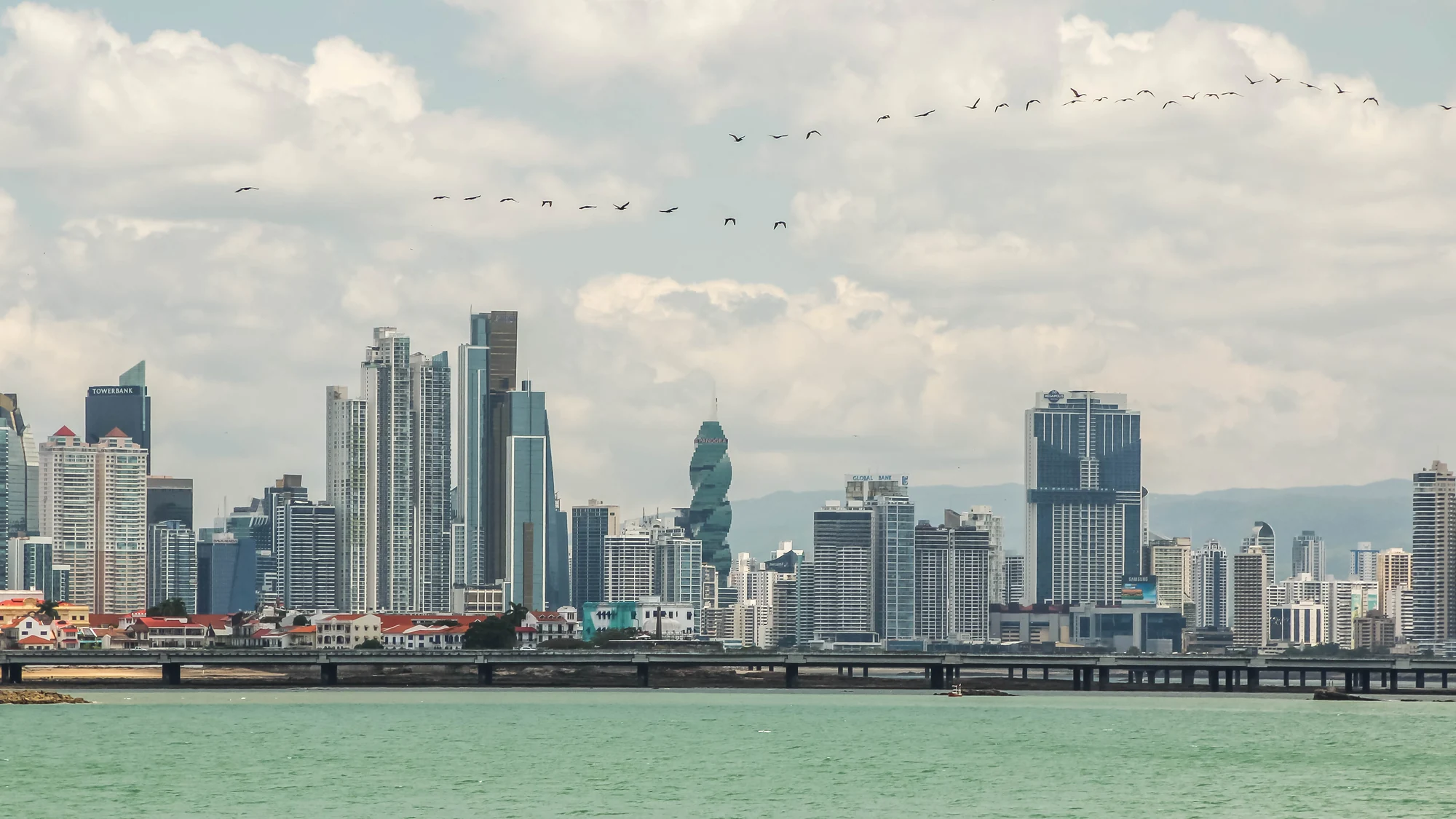
A morning walk beside the bay. Coffee in a historic plaza. An apartment above the city, with restaurants, shops, and the possibility of a different everyday life below.
Panama City offers plenty to catch your attention. But if you are beginning to explore life abroad, its appeal may be just as much about practical things: connections to North America, familiar currency, access to urban services, and immigration options worth investigating.
The capital deserves a closer look on its own terms. Your budget matters, but so does the life you want it to support.
First, where are we?
Panama sits in Central America, between Costa Rica and Colombia. Panama City, its capital, faces the Pacific Ocean near the canal’s Pacific entrance. The country touches both the Pacific and Caribbean, but this is a Pacific waterfront city. 1,2
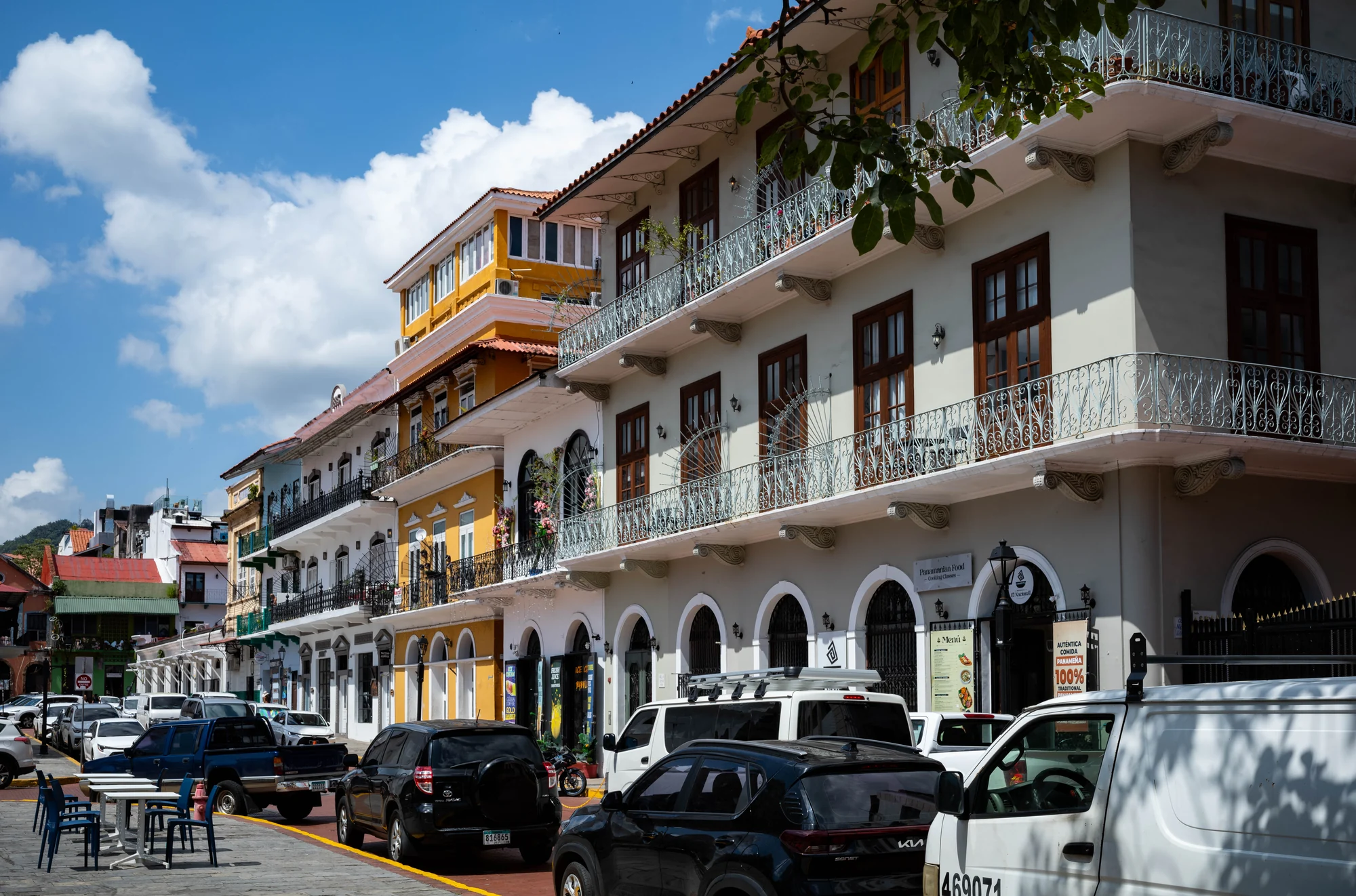
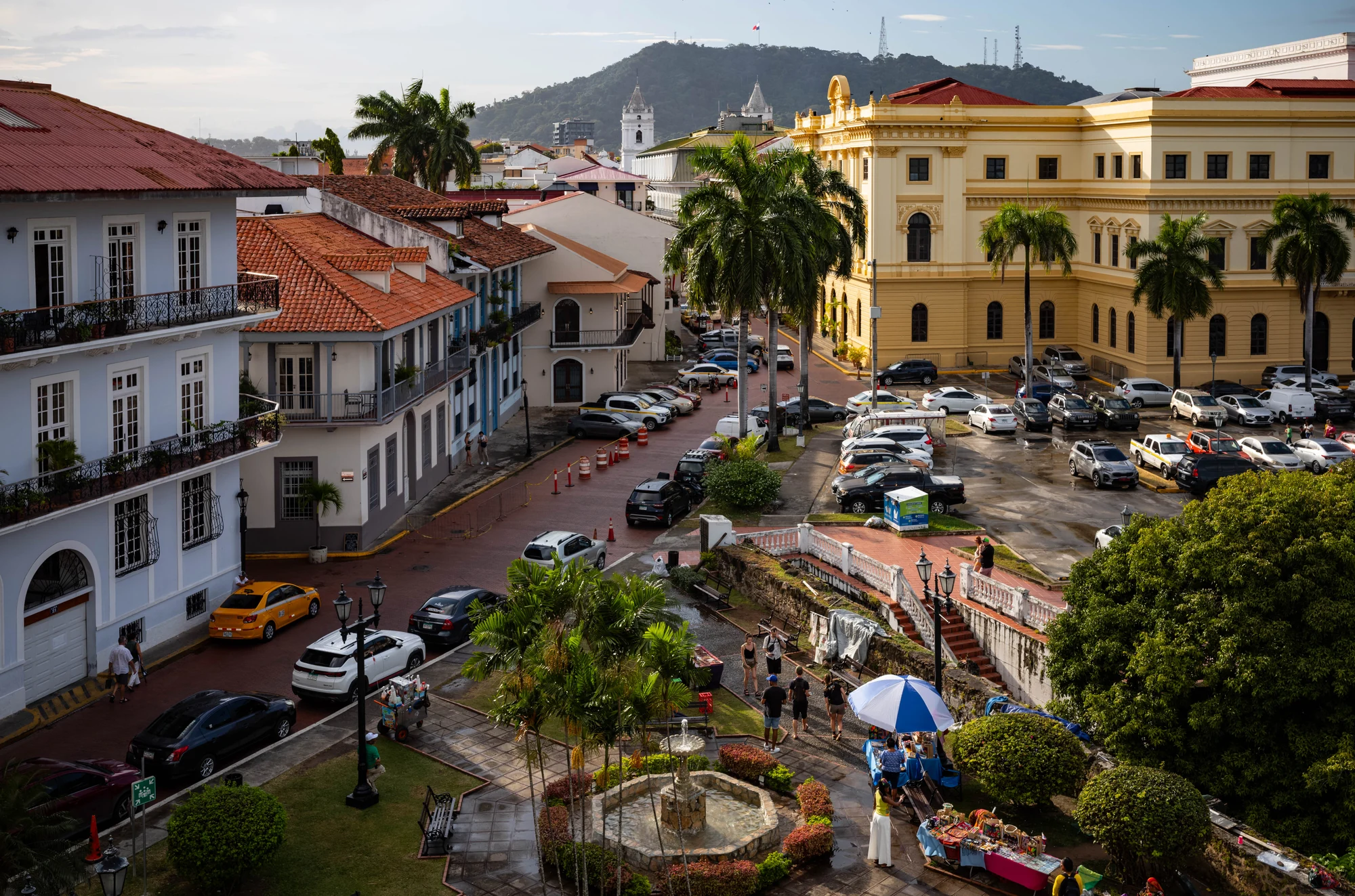
Its skyline is only one part of the picture. Casco Antiguo—also called Casco Viejo—offers historic streets and plazas, while the modern city brings towers and busy commercial districts. Nearby parks add another layer of green. 2
For someone deciding between a smaller town and a capital, that variety is part of the attraction. You can research several very different versions of daily life within the same city.

A different everyday, closer to home
For North Americans, distance can influence a move as much as rent.
Panama’s tourism authority lists nonstop service to Tocumen International Airport from cities including Miami, Orlando, Tampa, Atlanta, Houston, New York, and Toronto. Routes and schedules need checking for your travel dates, and travelers outside those departure cities may still need a connection. 3
Compared with a journey from North America to Southeast Asia, Panama can make a scouting trip or return visit much more manageable. The benefit is practical: think about the entire journey from your home airport, including connections, rather than the international flight alone.
The time difference helps, too. Panama stays on UTC−5 throughout the year. It shares U.S. Eastern Standard Time and is one hour behind the U.S. East Coast during daylight saving time. That can simplify calls with family or colleagues. 1
U.S. dollars and Panamanian balboas are official currencies. For someone budgeting from dollar-based income, that makes everyday price comparisons simpler, although it does not make the prices themselves lower. 1
If you work remotely, being nearby in time does not replace employer permission to work from another country. It does make the conversation worth having.
Warm weather, with a rainy season to understand
Panama City is hot and humid. Panama’s tourism authority describes a broad temperature range of about 70–90°F (21–32°C); this is a general guide, not a daily forecast. 4
The Pacific side generally has a drier season around December through April and a wetter period through much of the rest of the year. The transition varies, and wetter months can bring prolonged rain as well as showers. 5
The heat and rain shape the rhythm of the day. Early outings, shady places to pause, and an air-conditioned home can all make a difference to comfort.
This is also a useful contrast with Boquete. If our mountain-town article caught your attention for its cooler setting, do not assume the capital offers the same climate.
Prefer a cooler mountain setting? Explore our Boquete article ↗
Choose a neighborhood before choosing an apartment
A citywide description can only take you so far. Start with the kind of surroundings you enjoy.
Casco Antiguo offers historic architecture, plazas, boutique stays, and a concentration of dining and nightlife. It is worth exploring if historic atmosphere and lively evenings are high on your list. 6
El Cangrejo is a central neighborhood the tourism authority recommends for experiencing local city life. It makes a useful starting point for researching an everyday base. 6
Avenida Balboa appeals to people drawn to modern apartments, bay views, and access to the Cinta Costera waterfront. The waterfront setting gives this part of the city a different character from the historic district. 6
San Francisco offers another area to investigate for restaurants and modern urban living. 6
These are starting points rather than rankings. The right choice depends on whether you prefer historic streets, a central neighborhood, or a modern waterfront setting.

What might an ordinary day look like?
Imagine a walk along the Cinta Costera, followed by coffee and a few errands. Another day might include exploring Casco Antiguo, visiting a museum, or meeting friends for dinner. The Amador Causeway offers another place to walk or cycle beside the water. 2,7
Food can become part of discovering the city, from an everyday lunch to a special evening out. You do not need to build every day around a major attraction to enjoy being somewhere new.
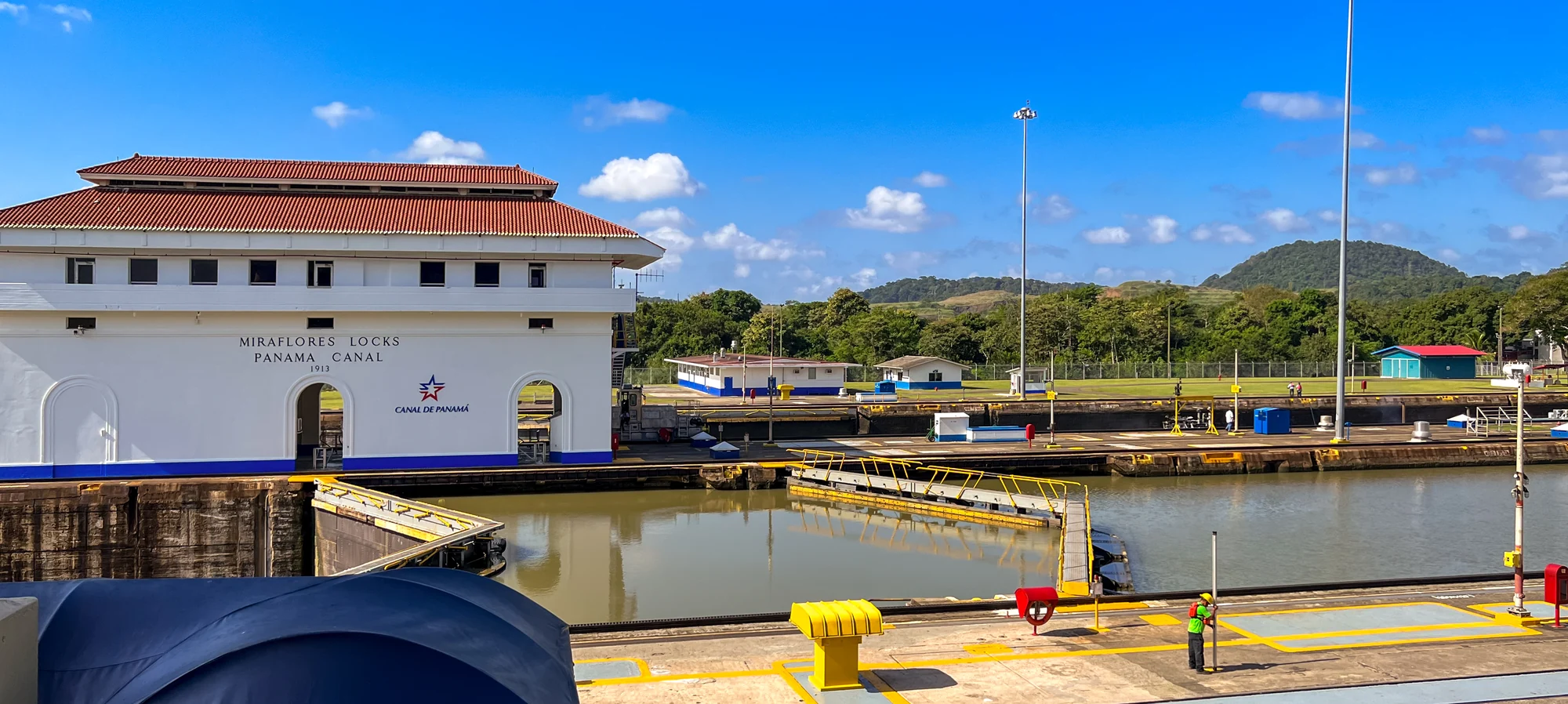
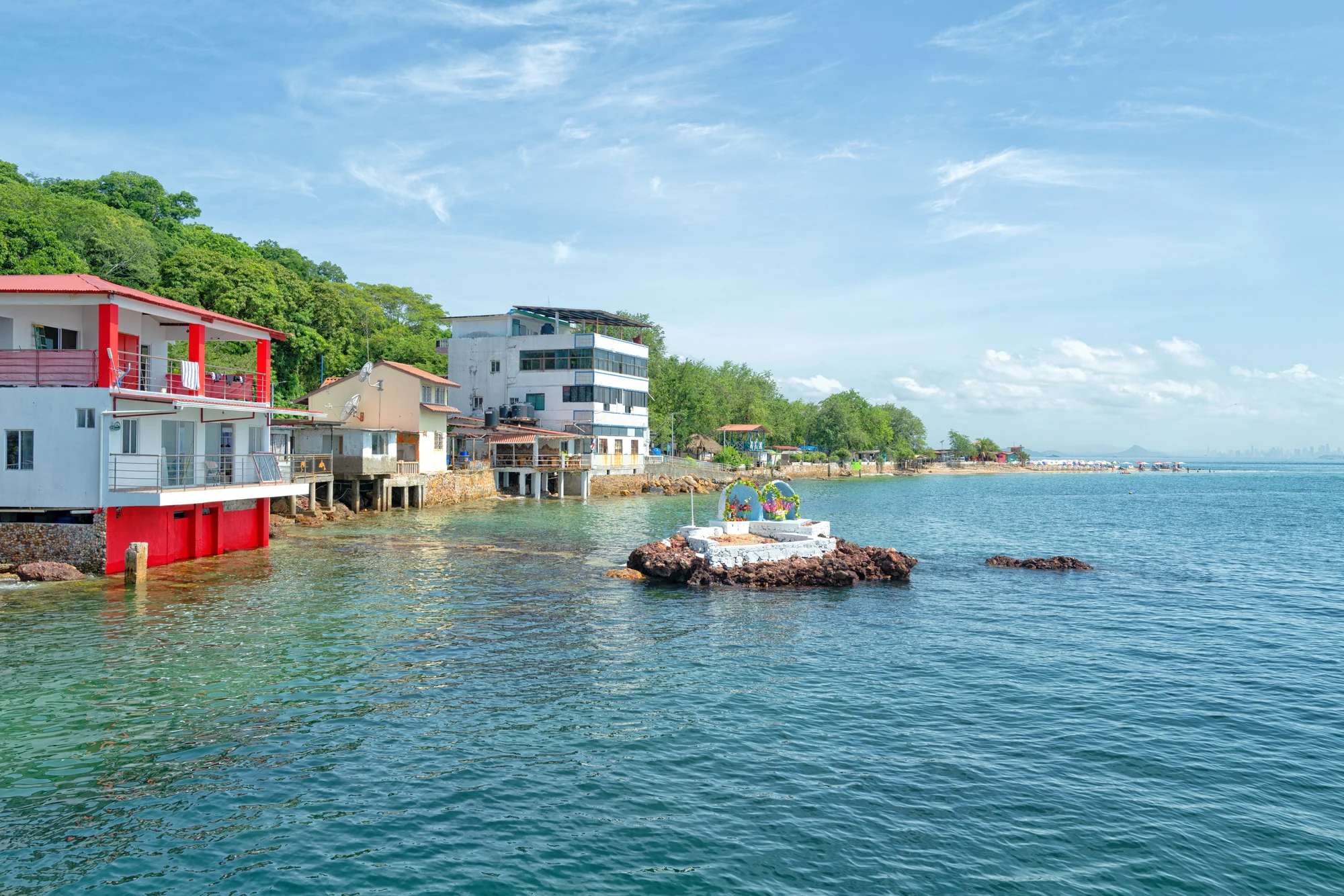
For a change of scene, Taboga and the Pearl Islands offer excursions from the capital. The canal and nearby forest parks add other possibilities. 2,8
It is worth separating waterfront living from beach living, however. If swimming and sandy beaches are central to your plans, investigate the actual trip to the beach you want to use. A bay-view apartment does not establish that your preferred beach is outside the door.

A short look at the cost of living
Housing is a good place to start. Numbeo’s crowdsourced figures, updated November 20, 2026, show one-bedroom averages around US$1,360 in the city center and US$975 outside it. These are contributor estimates, not verified listings or neighborhood-specific quotes. 9
The following is our illustrative allocation for one adult, renting longer term, cooking regularly, eating out sometimes, and living without a car. It is not a measured average.
| Monthly expense | Sample allocation |
|---|---|
| Rent | US$1,200 |
| Electricity, water, and other basic utilities | US$150 |
| Internet and mobile phone | US$75 |
| Groceries | US$350 |
| Eating out and coffee | US$200 |
| Transport | US$100 |
| Leisure, household items, and personal spending | US$225 |
| Subtotal before health insurance and other exclusions | US$2,300 |
Add an individual health-insurance quote and an allowance for uncovered care. Flights, immigration and legal fees, deposits, moving costs, and emergency savings are excluded. Short stays, car ownership, dependents, and extensive air-conditioning use change the calculation.
Use this as a worksheet: replace each allowance with costs for your own plans.
Getting around without automatically buying a car
Panama City has Metro and bus services, along with taxis and app-based transport. The tourism authority identifies areas suited to walking but recommends other transport between many neighborhoods. 7
The Metro’s published fares are US$0.35 for Line 1 and US$0.50 for Line 2; using both costs US$0.85. Check the current route and payment arrangements before traveling. 10
A convenient location can make a car-free stay more practical, while a home farther from useful public transport may mean relying more heavily on taxis or ride-hailing.
Healthcare belongs in the research
Access to private medical services is another reason to investigate the capital. For example, The Panama Clinic operates in Panama City and has an international patient office offering assistance in several languages, including English. 11
The useful next step is personal: identify providers for the care you need, ask about charges and payment arrangements, and obtain insurance terms that apply to your age and health history. Being near a hospital and having coverage for its services are separate questions.
Options for staying longer
Panama has immigration categories that may appeal to different readers. Two useful starting points are:
For eligible pension recipients: the Jubilado Pensionado residence permit. The official requirements generally call for a qualifying lifetime pension of at least US$1,000 per month, with additional financial requirements for dependents. Savings alone are not the pension requirement. It is a permanent-residence category. Supporting documents and an application through a legal representative are required. 12
That US$1,000 threshold is an immigration qualification, not a claim that it covers the lifestyle in our budget.
For eligible remote workers: the short-stay remote-worker visa. Official guidance describes qualifying work whose effects are abroad, foreign-source income of at least US$36,000 annually, and a stay of up to nine months, renewable once for the same period. Health coverage and supporting documentation are among the requirements. It is a temporary category, not permanent residence or a general permission to take local employment. 13
Other categories may fit different circumstances. Before paying for a move, confirm the applicable route, current requirements, and full costs with Panama’s immigration service and a qualified Panamanian immigration lawyer. Tourist admission is a separate matter.
The practical tradeoffs
Give the everyday details as much attention as the skyline: heat, rain, travel times, street noise, and the cost of the housing you would actually choose.
Safety also deserves location-specific research. The U.S. State Department identifies opportunistic theft among the risks facing visitors; a modern building or popular district does not remove the need for normal precautions. Review current advice before a trip. 1
A first visit should include ordinary errands as well as sightseeing. Price a grocery basket, view apartments in person, and try one or two journeys you would regularly make. These small checks help turn an appealing destination into a realistic personal choice.

Could this be your next everyday?
Panama City may interest someone who wants urban variety, a warm climate, and connections that keep North America within easier reach. Its immigration options can add another reason to investigate, when your circumstances fit.
Perhaps the capital’s energy will appeal to you. Perhaps visiting will confirm that Boquete’s smaller setting is closer to what you want.
Either is a useful discovery. The first step is to find a place worth exploring, then look closely enough to picture a life there.
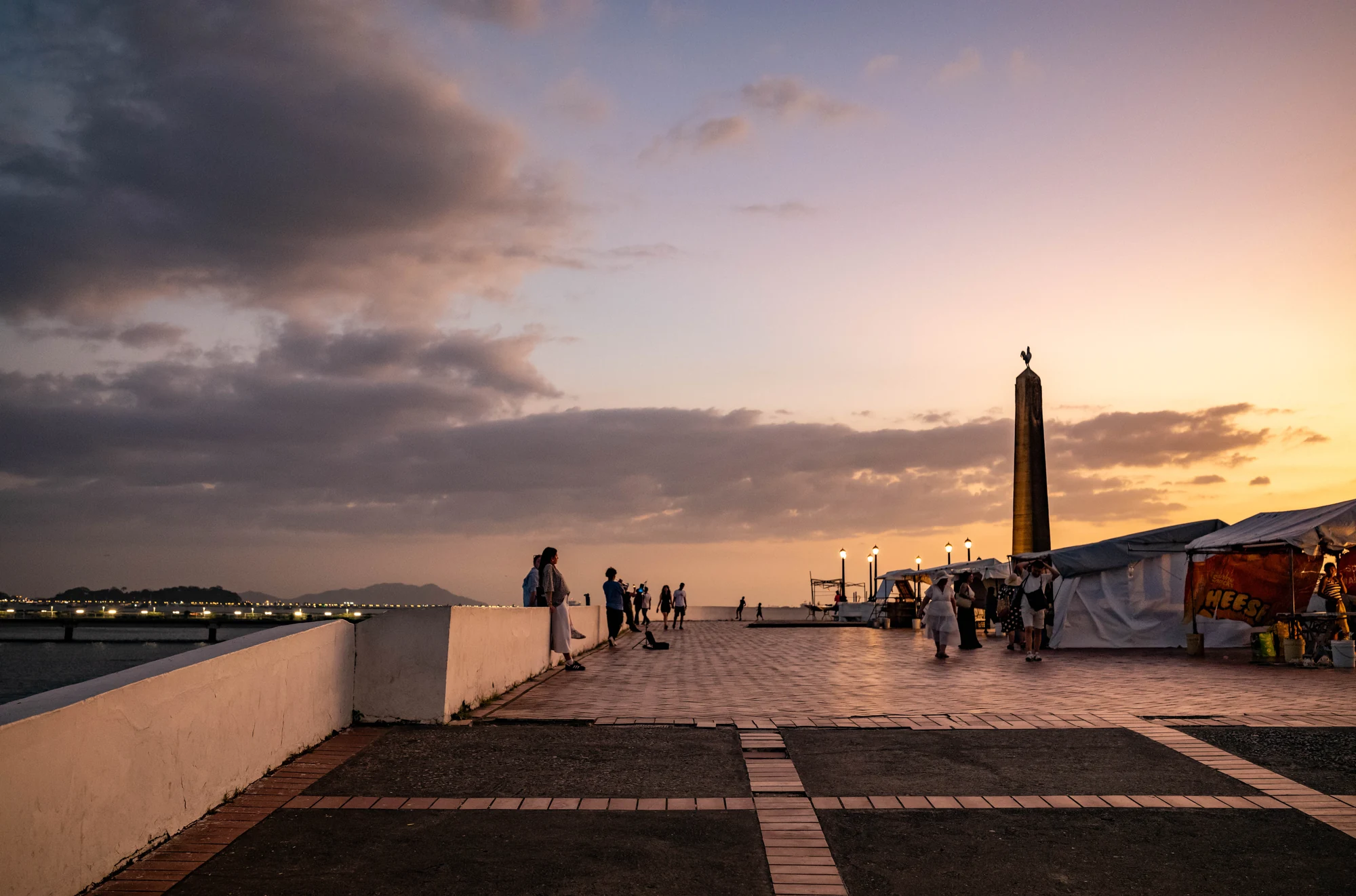

Photo credits and licenses
- Skyline across the bay — Dr. Thomas Liptak · CC BY-SA 4.0. Resized and WebP-converted; displayed uncropped. View adapted image under the same license.
- Casco Viejo street life — RB Photo · CC BY 2.0. Resized and WebP-converted; displayed uncropped. View adapted image under the same license.
- Historic plaza — RB Photo · CC BY 2.0. Resized and WebP-converted; displayed uncropped. View adapted image under the same license.
- Casco Viejo at dusk — RB Photo · CC BY 2.0. Resized and WebP-converted; displayed uncropped. View adapted image under the same license.
- Taboga Island waterfront — Otávio Nogueira from Fortaleza, BR · CC BY 2.0. Resized and WebP-converted; displayed uncropped. View adapted image under the same license.
- Miraflores Locks — Terry Ott · CC BY 2.0. Resized and WebP-converted; displayed uncropped. View adapted image under the same license.

Research sources & editorial notes
Researched November 19, 2026; immigration, flight, transport, and rental references rechecked November 22, 2026. This introduction does not claim a firsthand reporting visit. Costs are planning estimates; confirm current requirements and quotes for your own plans.
- U.S. Department of State, Panama country information and travel advisory: https://travel.state.gov/en/international-travel/travel-advisories/panama.html — geography, time zone, currency, and safety. U.S. dollars and Panamanian balboas are official currencies.
- Panama Tourism Authority, Panama City: https://www.tourismpanama.com/places-to-visit/panama-city/
- Panama Tourism Authority, North America air connections: https://www.tourismpanama.com/plan-your-trip/getting-here/from-north-america/
- Panama Tourism Authority, hiking in Panama City: https://www.tourismpanama.com/places-to-visit/panama-city/things-to-do/outdoors-and-nature/hiking-waterfalls/
- Smithsonian, An Introduction to Panama: https://nationalzoo.si.edu/sites/default/files/documents/an_introduction_to_panama_2018.pdf — general seasonal climate background; not a current forecast.
- Panama Tourism Authority, areas to stay: https://www.tourismpanama.com/places-to-visit/panama-city/places-to-stay/
- Panama Tourism Authority, transport: https://www.tourismpanama.com/travel-around-panama/
- Panama Tourism Authority, boating and islands: https://www.tourismpanama.com/places-to-visit/panama-city/things-to-do/watersports-and-beaches/boating/
- Numbeo, Panama City, updated November 20, 2026: https://www.numbeo.com/cost-of-living/in/Panama-City — crowd-contributed reference, not a rental survey. All budget allocations are editorial planning assumptions; no specific apartment has been verified.
- Metro de Panamá, official network and fare map: https://www.elmetrodepanama.com/wp-content/uploads/2025/07/Mapa-Metro-L1L2-webmetro.pdf
- The Panama Clinic, international office: https://thepanamaclinic.com/en/centers-and-services/international-office/
- Panama Digital, official Pensionado permanent residence information: https://www.panamadigital.gob.pa/InformacionTramite/solicitud-de-permiso-de-residente-permanente-como-jubilado-y-pensionado ; Servicio Nacional de Migración checklist: https://www.migracion.gob.pa/documentos/jubilado-pensionado/
- PROPANAMA, official remote-worker visa guidance: https://propanama.gob.pa/visa-para-nomadas-digitales/ ; Executive Decree 198 of May 7, 2021: https://www.propanama.gob.pa/wp-content/uploads/2024/03/DECRETO-198.pdf